

Table of Contents
Last updated: 2 July 2026
Editorial note: This article summarises official food-recall and health guidance for UK readers. It does not replace medical advice. Product details and official alerts should be rechecked before publication or purchase.
Selected Zapp’s and Dirty potato chips have been recalled in the United States because a seasoning ingredient may have been exposed to Salmonella. The FDA potato chip Salmonella warning applies only to specified flavours, packet sizes, UPCs, best-by dates and batch codes.
Utz Quality Foods announced the voluntary recall on 4 May 2026. The US Food and Drug Administration later placed it in its most serious recall category, Class I, causing the story to return to the news at the end of June and beginning of July.
This is not a blanket warning covering every packet made by Utz, Zapp’s or Dirty. It is also not presented as a general UK recall. However, UK consumers may encounter American crisps through specialist import shops, online sellers, gifts or purchases made while travelling.
Quick Answer: What Is the FDA Potato Chip Salmonella Warning?
The warning concerns nine product-and-size combinations sold under the Zapp’s and Dirty brands. Utz recalled them because a seasoning containing dry milk powder, sourced from California Dairies and supplied through a third party, might contain Salmonella.
Importantly, the affected seasoning batches had tested negative for Salmonella before use. The company still recalled the products as a precaution after the ingredient supplier’s recall.
At the time of the original announcement, Utz said it had received no complaints of illness connected with the products. Consumers should nevertheless avoid eating any packet that exactly matches the recall details.
What Happened in the Utz Potato Chip Recall?
Utz Quality Foods was notified that dry milk powder used in a seasoning might present a Salmonella risk. That seasoning had been used in limited varieties of Zapp’s and Dirty potato chips.
The company’s official potato chip recall notice states that the relevant seasoning batches tested negative before use. The recall was therefore precautionary and followed action involving the ingredient supplier.
This distinction matters. The announcement does not say that every recalled packet tested positive for Salmonella. It means that specified products were removed because an ingredient in their supply chain might have presented a risk.
Was Salmonella found in the finished crisps?
The recall announcement does not report confirmed Salmonella in the finished Zapp’s or Dirty products. It says the affected seasoning batches tested negative before they were used.
A precautionary recall can still be appropriate when uncertainty exists within an ingredient supply chain. Removing potentially affected products helps limit exposure while manufacturers and regulators investigate.
Were illnesses reported?
At the time of the 4 May 2026 announcement, Utz said it had received no complaints of illness associated with the recalled products.
That statement should not be rewritten as “nobody became ill” or treated as a permanent conclusion. It reflects the information reported to the company when the notice was issued.
Is This a New Recall?
The recall itself was announced in May 2026. The later headlines do not represent an entirely separate July recall involving a new group of products.
| Date | Development | Meaning for consumers |
| 4 May 2026 | Utz announced the voluntary US recall | Selected Zapp’s and Dirty products were identified |
| Late June 2026 | The FDA classified the recall as Class I | The potential hazard received the FDA’s most serious classification |
| 1 July 2026 | Wider news coverage appeared | Reports highlighted the classification of the existing recall |
Consumers who checked their cupboards in May may therefore wish to check again, especially if they still have packets with best-by dates extending into July or August 2026.
What Does an FDA Class I Recall Mean?
A Class I recall is the FDA’s most serious recall classification. According to the agency’s recall classification guidance, it is used where there is a reasonable probability that exposure to a product could cause serious adverse health consequences or death.
The classification describes the potential seriousness of the hazard. It does not mean:
- Every recalled packet contains Salmonella.
- Everyone who eats an affected product will become ill.
- Illnesses or deaths have necessarily occurred.
- Every product made by the company is unsafe.
Is a Class I recall the same as a foodborne illness outbreak?
No. A recall, confirmed contamination and an outbreak are related but different concepts.
A recall removes products that may present a risk. Confirmed contamination means testing has identified a harmful organism in a product or ingredient. An outbreak generally involves multiple illnesses linked through public-health investigation to a shared source.
The Utz action was described as a precautionary recall connected with an ingredient supplier. The original announcement did not report an outbreak linked to the crisps.
Which Zapp’s and Dirty Potato Chips Are Affected?
Only packets matching the relevant product, size, UPC, best-by date and batch code should be treated as part of this recall.
| Product and size | UPC | Best-by date and corresponding batch code |
| Zapp’s Bayou Blackened Ranch, 1.5oz | 83791272917 | 3 Aug — 26030070101; 10 Aug — 26036070102; 17 Aug — 26043070101; 24 Aug — 26052070103 |
| Zapp’s Bayou Blackened Ranch, 2.5oz | 83791272924 | 3 Aug — 26029070104; 17 Aug — 26044070104 or 26045070104; 31 Aug — 26058070104 |
| Zapp’s Bayou Blackened Ranch, 8oz | 83791272931 | 27 Jul — 26024070105 or 26024070104; 3 Aug — 26029070104 or 26030070104; 10 Aug — 26037070105 or 26038070105; 17 Aug — 26044070105 or 26045070105 |
| Dirty Salt and Vinegar, 2oz | 83791520148 | 3 Aug — 26030070104, 26031070104 or 26031070101; 10 Aug — 26038070102 or 26038070103 |
| Zapp’s Salt and Vinegar, 1.5oz, 60-count | 83791010144 | 3 Aug — 26030070101 or 26031070101; 10 Aug — 26036070102 or 26037070102 |
| Dirty Maui Onion, 2oz | 83791520162 | 8 Aug — 26052070103 |
| Zapp’s Big Cheezy, 2.5oz | 83791192208 | 31 Aug — 26058070104 |
| Zapp’s Big Cheezy, 8oz | 83791192246 | 31 Aug — 26058070104 or 26059070104 |
| Dirty Sour Cream and Onion, 2oz |
83791520094 |
31 Aug — 26059070104 |
Dates shown in the official notice are for 2026. The US packet sizes have been preserved because consumers need to compare their packaging with the original recall information.
How should a packet be checked?
Consumers should examine the barcode area and printed production information, which may appear on the back, bottom or sealed section of the packet.
A flavour match alone is not enough. The packet size, UPC, best-by date and batch code should all be compared with the table.
Before disposing of a matching packet, it may be helpful to photograph:
- The front and back of the packaging
- The barcode and UPC
- The best-by date
- The batch code
- The purchase receipt or seller details
These records may help when contacting the retailer or requesting a refund.
Are All Utz, Zapp’s and Dirty Products Recalled?
No. The recall is limited to the products and identifying codes listed in the announcement. Utz stated that no other products it produced were included.
A packet should not be considered recalled merely because it carries the Zapp’s, Dirty or Utz name. Similarly, another packet of the same flavour may fall outside the recall if its size, date or batch code differs.
This is why broad claims such as “all Zapp’s crisps are unsafe” are misleading.
Were the Recalled Potato Chips Sold in the UK?
The official announcement describes a voluntary recall in the United States and says the affected products were available through US retail stores nationwide. It does not describe a UK-wide recall.
That does not rule out the possibility that individual packets reached Britain through:
- Specialist American-food shops
- Online marketplaces
- Independent importers
- Gifts or personal imports
- Purchases made during US travel
UK consumers with imported Zapp’s or Dirty products should check the packet details rather than assuming that geographical distance removes the risk.
They can also check current Food Standards Agency or Food Standards Scotland alerts and contact the retailer or importer that supplied the product.
What Should Someone Do With an Affected Packet?
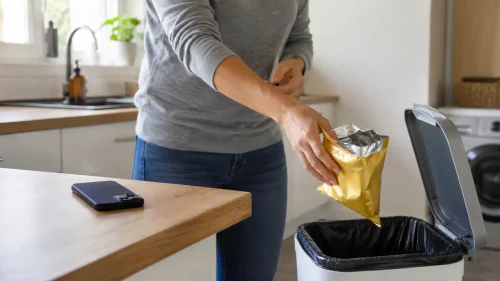
Anyone with an exact match should not eat the product. Utz advises consumers to discard affected packets.
A practical response is to:
- Stop eating the crisps.
- Photograph the packaging and product codes.
- Keep purchase information where available.
- Prevent children or other household members from accessing the packet.
- Dispose of it securely.
- Contact the seller or Utz Customer Care about a possible refund.
- Monitor for symptoms if any of the product has already been eaten.
Utz listed its US Customer Care number as 1-877-423-0149, available Monday to Friday from 9am to 6pm Eastern Time. International calling charges or availability may apply to UK callers.
Eating part of a recalled packet does not mean illness is certain. Consumers should remain calm, stop eating the product and follow appropriate medical guidance if symptoms appear.
What Are the Symptoms of Salmonella Infection?
Salmonella can cause diarrhoea, fever, nausea, vomiting and abdominal pain. Some people develop mild illness, while others may experience more serious complications.
Young children, older people and those with weakened immune systems can face a greater risk of severe illness. Dehydration may also become a concern when diarrhoea or vomiting is persistent.
UK readers experiencing stomach illness should follow current NHS diarrhoea and vomiting advice. The guidance recommends taking plenty of fluids and using small sips when feeling sick.
When should someone contact NHS 111?
NHS 111 should be contacted when appropriate, including if:
- A person cannot keep fluids down.
- Signs of dehydration continue.
- There is bloody diarrhoea or bleeding from the bottom.
- Diarrhoea lasts more than seven days.
- Vomiting lasts more than two days.
- There is concern about an unwell baby.
- Symptoms are severe or worsening.
Emergency help may be needed for symptoms such as severe breathing difficulty, confusion, a sudden severe stomach ache or vomit containing blood.
Confirmed Facts and Misleading Claims
Confirmed facts
- Utz announced the recall on 4 May 2026.
- It covers limited Zapp’s and Dirty potato chip products.
- The concern involved seasoning containing dry milk powder.
- The seasoning batches had tested negative before use.
- The action followed the ingredient supplier’s recall.
- No illness complaints had been reported to Utz when the announcement was issued.
- The FDA later classified the recall as Class I.
- Consumers should not eat an exact product match.
Claims to avoid
- “Every Zapp’s or Dirty product is recalled.” False. Only specific product, size, date and batch combinations are listed.
- “Every recalled packet tested positive for Salmonella.” Unsupported. The announcement says the affected seasoning batches tested negative before use.
- “Class I means someone has died.” Incorrect. The classification describes the potential severity of a risk; it does not confirm a death or illness.
- “A new set of products was recalled in July.” Misleading. July coverage largely relates to the classification and renewed reporting of the May recall.
- “The warning automatically covers all UK shops.” Unsupported. The official recall is described as a US action. Imported packets should still be checked.
Real-Life Example: Checking Imported Crisps in Britain
Suppose a customer in Manchester bought an 8oz packet of Zapp’s Bayou Blackened Ranch from an online American-food seller.
The flavour and size appear in the recall, but that does not complete the check. The customer should find UPC 83791272931, then compare the best-by date and batch code.
If the packet shows a best-by date of 10 August 2026 but its batch code does not match 26037070105 or 26038070105, it is not one of the combinations identified in the notice. If all details match, the customer should not eat it and should record the packaging before disposal.
This process avoids unnecessary alarm while ensuring that an affected packet is not overlooked.
What Should UK Consumers Do Next?
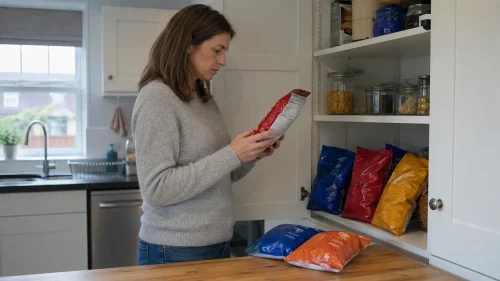
Consumers with American snack products at home should carry out a brief cupboard check:
- Look for the Zapp’s and Dirty brand names.
- Confirm the flavour and packet size.
- Compare the UPC, date and batch code.
- Set aside any exact match.
- Photograph and securely dispose of the packet.
- Contact the retailer or manufacturer if a refund is required.
- Follow NHS guidance if illness develops.
Retailers and importers should check stock and supplier records, remove matching products and follow applicable UK food-safety responsibilities.
Key Takeaways
The FDA potato chip Salmonella warning is genuine, but it covers limited products rather than every Utz, Zapp’s or Dirty packet.
The recall was announced in May 2026 and later classified as Class I. The possible risk arose from a seasoning ingredient, although the relevant seasoning batches tested negative before use.
UK readers should focus on imported packets and compare all identifying details. Anyone with an exact match should not eat it.
Conclusion
The FDA potato chip Salmonella warning should be taken seriously without being overstated. It concerns specified Zapp’s and Dirty potato chips distributed in the United States and does not establish that every packet was contaminated.
Checking the product name, size, UPC, best-by date and batch code provides the most reliable answer. Consumers with a match should discard it and seek appropriate medical guidance if concerning symptoms develop.
Frequently Asked Questions
Which potato chip brands are included in the warning?
The recall includes specified products sold under the Zapp’s and Dirty brands. It does not include every product made by Utz.
Did the recalled potato chips test positive for Salmonella?
The announcement does not report confirmed Salmonella in the finished crisps. It says the affected seasoning batches tested negative before use.
Why were the products recalled if the seasoning tested negative?
The products were recalled as a precaution after a supplier-related concern involving dry milk powder used in the seasoning.
Does a Class I recall mean every packet is dangerous?
No. Class I describes the potential seriousness of exposure. Consumers still need to check whether their packet matches the listed product information.
Were any illnesses linked to the crisps?
Utz said it had received no illness complaints connected with the products when the original recall announcement was published.
Can the recalled crisps be found in Britain?
The action is a US recall, but individual packets may have reached Britain through import shops, online sellers, travellers or personal gifts.
What should someone do after eating a recalled packet?
They should stop eating it, record the product information and monitor for symptoms. NHS 111 should be contacted when symptoms are concerning or medical advice is needed.
Can Salmonella be detected by looking at or smelling the crisps?
Consumers should not rely on appearance, taste or smell. An affected packet should be identified through its product details and recall codes.