

Table of Contents
Direct Answer: What Are Rural Business Development Grants?
Rural Business Development Grants, also known as RBDGs, are USDA Rural Development grants that support economic development, job creation, training, technical assistance, and business growth projects in rural areas.
They are mainly awarded to eligible public bodies, Tribes, nonprofits, rural cooperatives organised as nonprofits, and institutions of higher education. They are not usually direct grants for individual private businesses or for-profit companies.
The programme is designed to help small and emerging rural businesses, generally meaning businesses with fewer than 50 employees and less than $1 million in gross annual revenue.
Key Takeaways
- Rural Business Development Grants support rural economic growth, job creation, business training, technical assistance, incubators, feasibility studies, and community development.
- Eligible applicants include public bodies, state agencies, towns, communities, federally recognised Tribes, nonprofit corporations, institutions of higher education, and qualifying rural cooperatives.
- Individuals, individual businesses, and for-profit organisations are not eligible to apply directly.
- Projects must benefit rural areas outside the urbanised periphery of a city with a population of 50,000 or more.
- There is no fixed maximum grant amount, but smaller requests receive higher priority, and USDA’s fact sheet says grants generally range from $10,000 to $500,000.
- For the 2026 cycle, USDA listed two application deadlines: 15 June 2026 for Strategic Economic and Community Development applications and 30 June 2026 for regular applications.
What Are Rural Business Development Grants?
Rural Business Development Grants are federal grants administered through USDA Rural Development.
The purpose of the programme is to promote economic development and job creation by funding eligible entities that deliver projects serving rural communities. Applications compete in two categories: business opportunity grants and business enterprise grants.
In simple terms, RBDGs help rural communities build the conditions that allow small businesses to start, grow, hire, and become more sustainable.
This may include business counselling, market research, feasibility studies, workforce training, business incubators, revolving loan funds, equipment, building renovation, rural transportation improvements, or local economic development planning.
A key point for readers is that the grant normally funds an eligible organisation, not a private business owner directly.
A rural business may benefit from the project, but the applicant is usually a local government, nonprofit, Tribe, rural cooperative, or similar rural-serving organisation.
Who Can Apply for Rural Business Development Grants?
USDA states that RBDG applications may be accepted from eligible rural-serving entities such as:
|
Applicant type |
Can apply? |
Notes |
|
Public bodies and government entities |
Yes |
Includes towns, communities, state agencies and authorities |
|
Federally recognised Tribes |
Yes |
Tribal governments are eligible applicants |
|
Nonprofit corporations |
Yes |
Must primarily serve rural areas |
|
Institutions of higher education |
Yes |
Public and state institutions may qualify |
|
Rural cooperatives |
Sometimes |
Must generally be organised as an eligible nonprofit entity |
|
For-profit businesses |
No |
Cannot receive RBDG grants directly |
|
Individuals |
No |
Individual applicants are not eligible |
USDA’s 2026 opportunity listing states that for-profit entities, individuals, and individual businesses are not eligible to receive grants under the programme.
Can a Small Rural Business Apply Directly?
A small rural business generally cannot apply directly for a Rural Business Development Grant. This is one of the most important details because many business owners search for “rural business grants” expecting cash funding for their own company.
However, a rural business can still benefit indirectly. For example, a local nonprofit could receive RBDG funding to provide training, technical assistance, business counselling, or revolving loan support to small businesses in the area.
A town could use funding for infrastructure that supports business expansion. A rural cooperative could support shared facilities or market development.
So, the practical answer is:
A rural business usually cannot apply directly, but it may receive support through an RBDG-funded project run by an eligible organisation.
What Businesses Are RBDG Projects Designed to Help?
RBDG projects are intended to support small and emerging private businesses in rural areas. USDA’s fact sheet says eligible businesses served by the programme must have:
|
Requirement |
Standard |
|
Employees |
Fewer than 50 |
|
Gross annual revenue |
Less than $1 million |
|
Location |
Rural area served by the project |
This makes the programme especially relevant for small rural manufacturers, local service businesses, food producers, tourism businesses, rural retailers, community enterprises, agricultural support businesses, and early-stage rural entrepreneurs.
What Counts as a Rural Area?
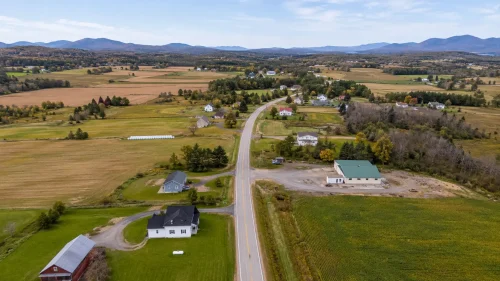
RBDG funds must be used for projects that benefit rural areas or towns outside the urbanised periphery of a city with a population of 50,000 or more.
USDA advises applicants to check area eligibility and contact the relevant USDA Rural Development state office before preparing an application.
This means applicants should not assume eligibility based only on whether a place “feels rural.” USDA eligibility depends on official programme definitions, the service area, population thresholds, and the location of the proposed project.
Types of Rural Business Development Grants
Rural Business Development Grants are separated into two broad categories:
- Business Enterprise Grants
- Business Opportunity Grants
Both support rural economic development, but they are used for slightly different purposes.
Business Enterprise Grants
Business enterprise grants are generally used for projects that directly support small and emerging rural businesses.
USDA lists several eligible uses, including training, technical assistance, project planning, business counselling, market research, feasibility studies, professional or technical reports, and product or service improvements.
Funds may also support land development, building construction or renovation, machinery and equipment, revolving loan funds, rural distance learning, transportation improvements, technology-based economic development, business incubators, and long-term strategic planning.
Examples of Business Enterprise Grant Projects
A strong business enterprise project could include:
- A nonprofit providing technical assistance to rural start-ups.
- A town renovating a building into a shared business incubator.
- A rural development organisation creating a revolving loan fund.
- A community college offering job training for rural manufacturers.
- A local authority supporting market research for small rural producers.
- A rural cooperative improving shared processing or distribution facilities.
The strongest projects usually show a clear connection between the funding request and measurable outcomes such as jobs created, businesses assisted, private investment supported, or new services made available in the rural community.
Business Opportunity Grants
Business opportunity grants are typically used for broader economic development, planning, leadership, and entrepreneurship activity.
USDA says opportunity-type grants can support community economic development, technology-based economic development, feasibility studies, business plans, leadership and entrepreneur training, rural business incubators, and long-term strategic planning.
Opportunity-type grants are limited to up to 10 percent of total annual RBDG funding, so they may be more competitive or more limited depending on the year.
Examples of Business Opportunity Grant Projects
Examples may include:
- A regional entrepreneurship training programme.
- A feasibility study for a rural food hub.
- A long-term business development plan for a rural county.
- A technology-based economic development strategy.
- A leadership programme for rural entrepreneurs.
- Planning for a business support centre or rural incubator.
What Can Rural Business Development Grants Be Used For?
RBDG funding can support a wide range of business and community development activities. Common eligible uses include:
|
Funding use |
What it may support |
|
Technical assistance |
Business advice, expert support, operational guidance |
|
Training |
Entrepreneur training, workforce development, job skills |
|
Business counselling |
Help with planning, finance, operations and growth |
|
Market research |
Demand studies, customer research, sector analysis |
|
Feasibility studies |
Testing whether a project is practical and financially viable |
|
Business plans |
Planning documents for rural enterprise development |
|
Equipment |
Machinery and equipment tied to eligible business development |
|
Building renovation |
Construction, conversion or renovation of eligible facilities |
|
Revolving loan funds |
Capital for start-up or working capital loans |
|
Business incubators |
Shared space, services and support for rural start-ups |
|
Transportation improvements |
Access improvements that support rural business activity |
|
Community economic development |
Projects that strengthen the wider rural economy |
The project must still fit USDA rules and must benefit eligible rural areas and small emerging businesses.
How Much Funding Is Available?
For the 2026 funding opportunity, the Grants.gov listing showed $27.7 million in programme funding and 450 expected awards.
The listing also confirmed that the funding instrument type is a grant and that there is no cost-sharing or matching requirement for eligibility.
USDA’s official programme guidance says there is no maximum grant amount, although smaller requests receive higher priority. USDA’s fact sheet says grants generally range from $10,000 to $500,000.
Applicants should be careful with this point: “no maximum” does not mean every large request is competitive.
RBDG is a competitive programme, and smaller, well-justified requests may score better than broad or unsupported applications.
Is There a Matching Requirement?
There is no cost-sharing or matching requirement for eligibility. However, the 2026 NOFO says additional priority points may be awarded for leveraging, and USDA’s programme page lists the percentage of non-federal funding committed to the project as one of the application evaluation factors.
This means a project can be eligible without match funding, but an application may be stronger if it includes confirmed local, private, state, philanthropic, or partner contributions.
2026 Rural Business Development Grant Deadlines
For fiscal year 2026, USDA listed two RBDG deadlines:
|
Application type |
Deadline |
|
Strategic Economic and Community Development applications |
15 June 2026 |
|
Regular RBDG applications |
30 June 2026 |
USDA states that complete applications must be submitted by 4:30 p.m. local time on the due date and that late submissions will not be considered.
Applicants should always confirm the current deadline with USDA Rural Development or Grants.gov because grant windows can change by funding year.
How Are Applications Evaluated?
RBDG applications are competitive. USDA says applications are evaluated based on:
- Evidence showing job creation at local businesses.
- Percentage of non-federal funding committed to the project.
- Economic need in the area served.
- Consistency with local economic development priorities.
- Experience of the grantee with similar efforts.
The 2026 NOFO also says applications are scored based on the information included in the application and supporting materials.
Missing eligibility or scoring information can damage the application because USDA may not consider information that is not submitted in writing.
What Makes a Strong RBDG Application?
A strong Rural Business Development Grant application should do more than describe a good idea. It should show that the project is needed, practical, measurable, locally supported, and aligned with USDA programme goals.
A competitive application should usually include:
- A clear rural service area.
- Evidence of economic need.
- A defined group of small and emerging businesses that will benefit.
- A realistic project budget.
- Strong documentation of local support.
- Evidence of job creation or business expansion.
- A practical work plan and timeline.
- Confirmed partner roles.
- Organisational experience.
- Clear performance measures.
- Evidence that the project supports local economic development priorities.
Applications that are vague, unsupported, or unclear about business benefits are less likely to compete well.
How to Apply for Rural Business Development Grants?
Applicants should start by contacting their USDA Rural Development state office. USDA advises applicants to speak with a Business Programs Specialist before filling out forms because local timelines, concept paper requirements, and state-specific instructions may apply.
Step-by-Step Application Process
- Confirm applicant eligibility
Make sure the applicant is an eligible public body, Tribe, nonprofit, institution of higher education, or qualifying rural cooperative. - Confirm rural area eligibility
Check whether the project benefits an eligible rural area under USDA rules. - Choose the correct grant category
Decide whether the project is a business enterprise project or business opportunity project. - Define the business need
Explain the rural economic problem, who is affected, and how the project will help. - Identify the businesses served
Show how the project will benefit small and emerging rural businesses. - Prepare a realistic budget
Break down costs clearly and connect each expense to eligible project activities. - Gather supporting documents
Include organisational documents, letters of support, financial information, maps, project plans, commitments of leveraged funds, and other required materials. - Register with SAM and obtain a UEI
The 2026 NOFO says applicants submitting electronically must have a Unique Entity Identifier, Taxpayer Identification Number, and active SAM.gov registration. - Submit early
USDA specifically advises applicants not to wait until the day of the application deadline. - Respond to USDA conditions if selected
Successful applicants receive award documents and must meet applicable conditions before funds are officially awarded.
Common Application Mistakes to Avoid
Assuming a Private Business Can Apply Directly
This is the most common misunderstanding. Individuals and for-profit businesses are not eligible direct applicants under RBDG.
Choosing the Wrong Grant Category
Applicants must indicate whether they are applying for enterprise-type or opportunity-type funds. Choosing the wrong category can weaken the application or create eligibility issues.
Weak Job Creation Evidence
Because job creation is one of the evaluation factors, applications should explain how the project will help local businesses create or support jobs.
Missing Local Economic Development Alignment
A project is stronger when it supports local or regional economic development priorities, such as workforce development, business retention, rural manufacturing, tourism, food systems, energy security, or producer market expansion.
Starting Too Late
USDA says the preparation process can take from a few weeks to several months, depending on the complexity of the application and completeness of materials.
Ignoring SAM Registration
SAM registration and UEI requirements can take time. Applicants should complete these steps early rather than waiting until the deadline.
Submitting an Unclear Budget
Every budget line should connect to an eligible use and support the project’s stated outcomes.
Examples of Projects That May Fit RBDG
The following examples show how the programme may work in practice.
Rural Business Incubator
A nonprofit applies for funding to renovate a building into a business incubator for rural entrepreneurs. The project includes shared workspace, training sessions, business counselling, and support for start-ups.
Revolving Loan Fund
A rural development organisation uses RBDG funding to capitalise a revolving loan fund that provides start-up and working capital loans to small rural businesses.
Technical Assistance Programme
A community college or nonprofit provides business planning, digital marketing support, financial literacy training, and market research help to small rural businesses.
Feasibility Study for a Food Hub
A regional organisation studies whether a food hub could help local producers process, store, distribute, and market value-added agricultural products.
Workforce Training for Rural Employers
An institution of higher education develops a job training programme aligned with rural manufacturers, local employers, or agricultural processing businesses.
What Rural Businesses Should Do If They Cannot Apply Directly?
A private rural business owner who is interested in RBDG funding should not stop at the eligibility restriction. Instead, they can look for eligible organisations in their area that may receive or apply for RBDG support.
Useful steps include:
- Contact the local USDA Rural Development office.
- Ask local economic development agencies whether they run RBDG-funded programmes.
- Speak with chambers of commerce, nonprofit business support groups, and community colleges.
- Check whether a local revolving loan fund or business incubator has USDA-backed resources.
- Look for training, technical assistance, or business counselling funded through rural development programmes.
- Consider other USDA programmes that may be open to businesses directly, depending on eligibility.
Alternatives to Rural Business Development Grants
RBDG is not the only rural funding option. Depending on the applicant and project type, other USDA programmes may be relevant.
|
Programme |
Who it may help |
What it supports |
|
Rural Energy for America Program |
Agricultural producers and rural small businesses |
Renewable energy systems and energy efficiency improvements |
|
Rural Microentrepreneur Assistance Program |
Microenterprise development organisations |
Microloans and technical assistance for rural microentrepreneurs |
|
Value-Added Producer Grants |
Agricultural producers and producer groups |
Value-added products, marketing opportunities and producer income growth |
USDA states that REAP provides grant funding and guaranteed loan financing for agricultural producers and rural small businesses for renewable energy systems and energy efficiency improvements.
RMAP supports microenterprise development organisations that provide loans and technical assistance to rural microentrepreneurs, while Value-Added Producer Grants help agricultural producers enter value-added activities related to processing and marketing new products.
Are Rural Business Development Grants Worth It?
Rural Business Development Grants can be highly valuable for organisations that serve rural communities and have a well-defined economic development project.
They are especially useful for nonprofits, towns, Tribes, public bodies, community colleges, and rural cooperatives that want to support entrepreneurship, business growth, job creation, technical assistance, infrastructure, or rural business planning.
However, they are not a quick or simple funding route. Applicants need time, documentation, local support, evidence of need, and a clear plan for measurable outcomes.
The programme is best suited to organisations that can show a credible link between the requested funding and long-term rural economic impact.
Conclusion
Rural Business Development Grants are an important USDA funding route for rural economic development, but they are often misunderstood.
The programme is not mainly a direct cash grant for private rural businesses. Instead, it funds eligible organisations that deliver projects benefiting small and emerging rural businesses.
For applicants, the best approach is to confirm eligibility early, contact the USDA Rural Development state office, define a clear rural business need, show measurable job or economic impact, and submit a complete application well before the deadline.
For business owners, the best route is often to connect with local nonprofits, economic development agencies, community colleges, rural cooperatives, or public bodies that may run RBDG-funded support programmes.
FAQs About Rural Business Development Grants
What are Rural Business Development Grants?
Rural Business Development Grants are USDA Rural Development grants that support rural economic development and job creation projects.
They fund eligible organisations that serve rural areas and help small and emerging businesses through training, technical assistance, planning, infrastructure, incubators, and other eligible activities.
Who qualifies for Rural Business Development Grants?
Eligible applicants can include public bodies, government entities, federally recognised Tribes, nonprofit corporations, institutions of higher education, state agencies, towns, communities, and qualifying rural cooperatives. Individuals and for-profit businesses are not eligible to apply directly.
Can an individual business owner apply for an RBDG?
No. Individual business owners and for-profit businesses are not eligible direct applicants. A business may still benefit from a project funded through an eligible organisation.
What is the employee limit for businesses served by RBDG projects?
USDA’s fact sheet states that eligible businesses served by RBDG projects must have fewer than 50 employees and less than $1 million in gross annual revenue.
What can RBDG funds be used for?
Funds can be used for eligible activities such as technical assistance, training, business counselling, market research, feasibility studies, business plans, equipment, building renovation, revolving loan funds, rural business incubators, community economic development, and technology-based economic development.
Is there a maximum grant amount?
USDA states that there is no maximum grant amount, but smaller requests receive higher priority. USDA’s fact sheet says grants generally range from $10,000 to $500,000.
Is matching funding required?
No matching funding is required for eligibility, but leveraged non-federal funds may help an application score better because USDA evaluates the percentage of non-federal funding committed to the project.
Where do applicants apply?
Applicants should apply through USDA Rural Development and contact the appropriate state office before preparing the application. USDA advises applicants to speak with a Business Programs Specialist to understand state-specific requirements and timelines.
What is the 2026 deadline for Rural Business Development Grants?
For 2026, USDA listed 15 June 2026 for Strategic Economic and Community Development applications and 30 June 2026 for regular applications. Complete applications must be submitted by 4:30 p.m. local time on the relevant due date.
Are Rural Business Development Grants the same as rural small business grants?
Not exactly. RBDGs support rural small business development, but they are usually awarded to eligible public, tribal, nonprofit, educational, or cooperative organisations rather than directly to small businesses.
Sources
- USDA Rural Development – Rural Business Development Grants.
- USDA Rural Development – Rural Business Development Grants Fact Sheet.
- Grants.gov / Simpler Grants – Rural Business Development Grant Program opportunity listing.
- USDA Rural Development – 2026 RBDG application announcement.
- USDA Rural Business Development Grants FY2026 NOFO.